
Retrograde Cricopharyngeal Dysfunction
R-CPD
The London Voice and Swallowing Clinic, and Mr Chadwan Al Yaghchi, are delighted to offer a
treatment for those who suffer extreme physical discomfort, due to an inability to burp.
What is R-CPD?
Retrograde Cricopharyngeal Dysfunction, or R-CPD for short, describes a medical condition which restricts an individual’s ability to burp.
When eating and drinking, the cricopharyngeus muscle (CP) is responsible for allowing food and liquid to pass into the oesophagous and then into the stomach, and for any gas created by the eating and drinking process to be ejected via the mouth.
For those who suffer from R-CPD the muscle only works in one direction - to allow food and drink to pass to the stomach. When the time comes for the gas to be released, the muscle does not open. Sufferers report feelings of bloating, pain in the stomach and chest, gurgling and excess flatulence, symptoms which often limit their enjoyment, particularly in a social setting.
Awareness around the condition is generally low among GPs, but ENT specialists have been successfully treating the condition with a simple application of Botox.
How does the procedure work?
There are two approaches available. The first, which takes slightly longer but has a higher rate of success, takes place in the operating room under a short general anaesthetic. A small camera, or endoscope, is passed into the throat via the mouth in order to visually identify the CP muscle. Botox is then injected directly into the muscle, using an endoscopic needle.
Alternatively, the procedure can be performed in the consulting room, while the patient is awake. With this method, we use an electromyography (EMG) device to confirm the position of the needle within the muscle and the injection is administered directly into the cricopharyngeus muscle via the skin at the front of the neck, causing the muscle to relax and become partially paralysed.
Mr Al Yaghchi will discuss the pros and cons of both options during the consultation so that patients can make an informed decision about their preferred approach.
The results
Patients begin to notice a change after 3 to 5 days, when they will experience some mild difficulty swallowing and what many describe as “micro burps”. This can last up to two weeks, after which, swallowing should return to normal alongside the desired relief from R-CPD symptoms.
Patients are advised to “practice” burping in the first 2-3 weeks after the procedure by drinking carbonated water and burping multiple times throughout the day, increasing volume and frequency gradually.
Recipients of the treatment report a long-term improvement in their ability to burp, long after the direct effects of the injection have worn off.
FAQs
The procedure is considered very successful. 99.5% of people are reported to be able to burp following the injection and 95% experience significant symptom relief.
R-CPD diagnosis is mainly based on symptoms and patient history. The treatment is often considered both diagnostic and therapeutic.
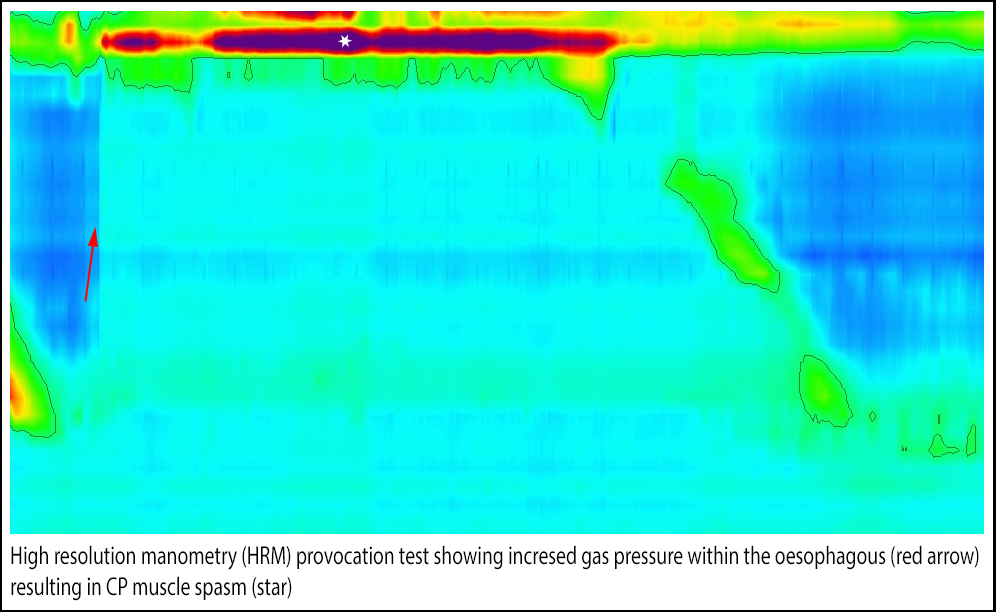
Uniqly to Mr Al Yaghchi practice, he offers a carbonated water provocation dignostic test using pharyngeal high-resolution manometry (Ph-HRM). This test is often reserved for difficult cases, unclear diagnosis or those who fail to respond to treatment. However the test can be offered, if desired, to confirm diagnosis to other patients.
The typical symptoms of R-CPD are as follows:
- Inability to burp
- A gurgling sound in the chest
- Bloating and tummy fullness
- Excess flatulence.
These symptoms are often present in early adolescence and the diagnosis is often missed for many years.
Awareness of R-CPD has predominantly spread recently through the work of specialists and patient groups. As such, diagnosis can be challenging. If you present symptoms resembling R-CPD, we are open to a conversation discussing your options and whether you would benefit from treatment.
he treatment is administered either endoscopically via the mouth under short general anaesthesia or via the skin at the front of the neck in the clinic. For the latter we use an electromyography (EMG) device to help confirm the position of the needle within the cricopharyngeus muscle.
R-CPD treatment is not currently funded by the NHS
The most common side effect of the treatment is temporary swallowing difficulty which typically lasts around two to three weeks. Another rare side effect is temporary weakness of the vocal cord movement, as one of the muscles responsible for opening the vocal cords (PCA) lies in close proximity to the CP muscle. Nevertheless, side effects are temporary and improve within a few weeks.
Research suggests that the results are permanent for around 80% of recipients following a single injection. Others might require a second intervention with a higher dose, and very rarely regular injections might be needed.
The procedure is done as a day case and only takes minutes to administer. If performed in the operating room, the time of general anaesthesia and recovery are added, with a total stay in hospital of around three hours.
The cost will differ depending on whether it is performed ”in-office” or in the operating room. Please enquire via secretary@lvsclinic.com for a specific quote.
The effects will begin around five days after the treatment and symptoms will continue to improve gradually over three to four weeks.
For many patients, a single injection is sufficient. Through follow up appointments, the option of a second injection with a higher dose can be discussed for the minority of patients who still show symptoms after six months.
No, the muscle will be temporarily paralysed until the effects of the Botox wear off, which can take around three months. However relief from R-CPD symptoms often outlasts the effect of Botox and is permanent in the majority of patients. The mechanism of the long-term effect is not fully known. One theory suggests that the Botox injection allows the CP muscle to retrain and that the patient relearns how to burp.
Temporary swallowing difficulty (dysphagia) after treatment is a common side effect. This is caused by the temporary weakness of the swallowing muscles in the first few weeks after injection. The severity of these symptoms varies and are mild in the majority of cases. Patients might experience difficulty swallowing large bites of foods with a chewier consistency, such as meat. Smaller bites and softer consistencies are recommended if a patient is experiencing dysphagia after treatment. Regurgitation is a much rarer side effect and describes the occasional return of a small amount of food and drink from the oesophagous into the throat. If this does occur, it can be effectively managed by eating smaller meals and avoiding lying down straight after eating until the effects of the Botox starts to wear off. Both side effects are temporary.